History of the Germans
byDirk Hoffmann-Becking
EducationHistorySocietyCulture
A narrative history of the German people from the Middle Ages to Reunification in 1991. Episodes are 25-35 min long and drop on Thursday mornings. "A great many things keep happening, some good, some bad". Gregory of Tours (539-594) HotGPod is now entering its 9th season. So far we have covered: Ottonian Emperors (# 1- 21) - Henry the Fowler (#1) - Otto I (#2-8) - Otto II (#9-11) - Otto II (#11-14) - Henry II (#15-17) - Germany in 1000 (#18-21) Salian Emperors(#22-42) - Konrad II (#22- 25) - Henry III (#26-29) - Henry IV/Canossa (#30-39) - Henry V (#40-42) - Concordat of...
Episodes(40 episodes)
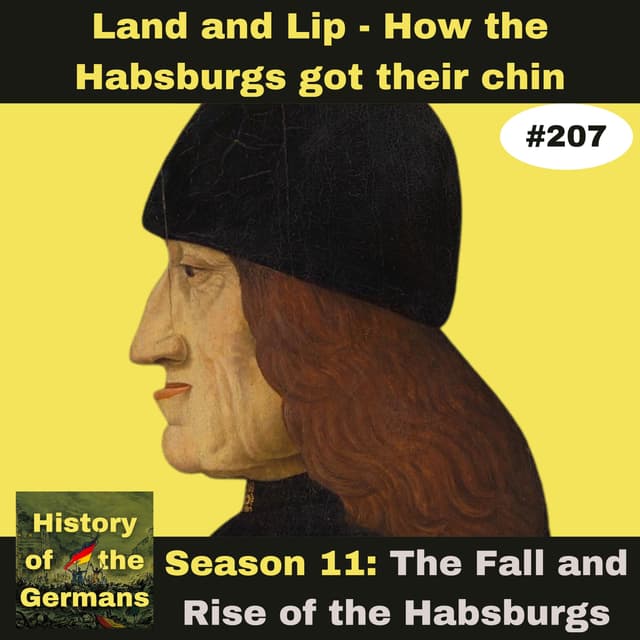
E207 - Ep.207 Of Land and Lip – How the Habsburgs got their Chin
“The Habsburgs ruled half of Europe with a chin that entered the room five minutes before they did,” is one of those witticisms that made the 19th century so amusing. But by then the Habsburg jaw had long receded. It had its heyday in the 16th and 17th century when people in Spain called out to the future emperor Charles V: “Your majesty, shut your mouth! The flies of this country are very insolent.” And when they looked at his later descendant, king Charles II who was probably the worst affected, they said, he was “more Habsburg than human...
Published: Sep 18, 2025Duration: 33:37
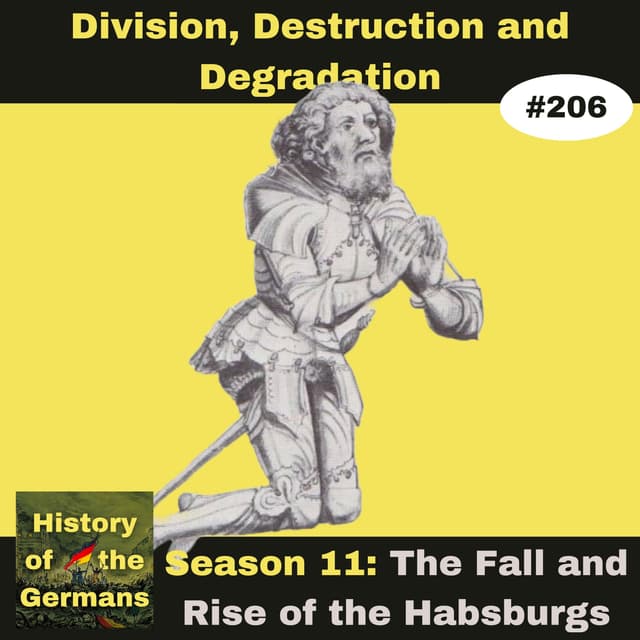
E206 - Ep. 206 – Division, Destruction and Degradation - Albrecht III&IV, Wilhelm, Leopold IV and Friedrich IV
Success for a princely family in the Late Middle Ages has a lot to do with reproductive luck. Not having any offspring, in particular no male offspring is a bit of a knockout. But having too many sons that could be a major issue too.And in 1386 the Habsburgs struggled with exactly that problem. Their territory was already divided between an Albertine and a Leopoldine line. But then Leopold had four sons, bringing the number of archdukes of Austria to six, which is five too many.In this episode we will discuss how they managed...
Published: Sep 11, 2025Duration: 34:01
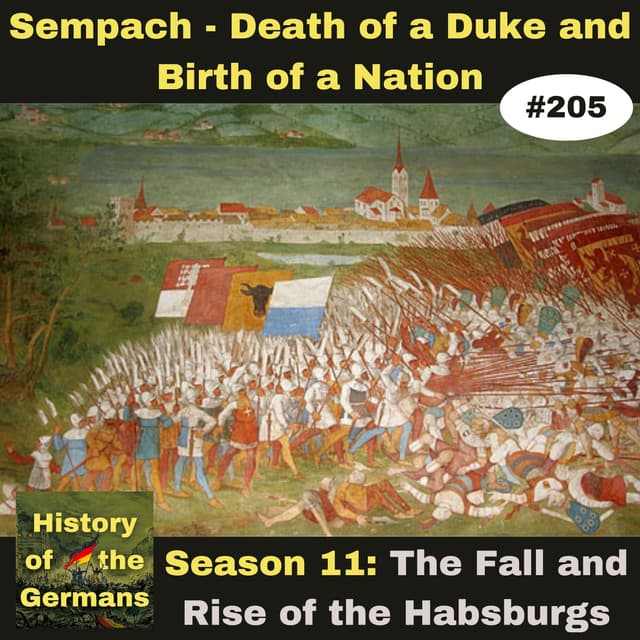
E205 - Ep. 205 – Sempach – the Death of a Duke and the Birth of a Nation
On July 9th, 1386 in a field near the Sempach lake., the armies of archduke Leopold of Austria line up against the forces of the city of Lucerne and the men of Uri, Schwyz and Nidwalden Much of what hads been told about this batte, the backstory of the Swiss Confederation and the objectives of the Habsburgs have been drenched in myth. Myths that are in the main debunked. That being said, the story is still dramatic and hugely important.The music for the show is Flute Sonata in E-flat major, H.545 by Carl Phillip Emmanuel...
Published: Sep 4, 2025Duration: 38:06
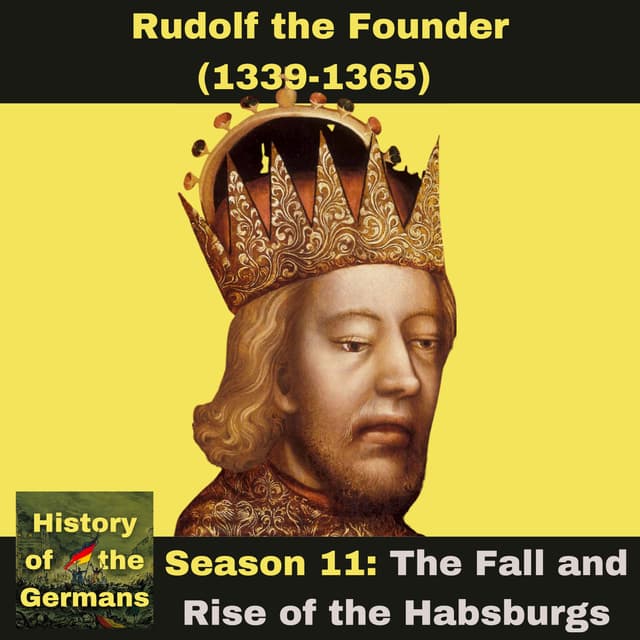
E204 - Ep. 204 – Rudolf IV, Founder and Forger (1339-1365)
Rudolf IV of Habsburg (1339–1365), son of Albrecht “the Wise,” reigned as Duke of Austria for just seven years but left a lasting mark. Born when the dynasty seemed close to extinction, Rudolf secured Austria’s survival and prestige. Politically, he sought to elevate Vienna by founding the University of Vienna (1365) and beginning construction of St. Stephen’s Cathedral. Though he fulfilled his father's ambition to gain the Tyrol, the family fell behind their rivals, namely the Luxemburgs.Rudolf’s most audacious act was the Privilegium Maius, a set of forged charters claiming ancient Roman emperors had granted Austria near...
Published: Aug 28, 2025Duration: 32:00
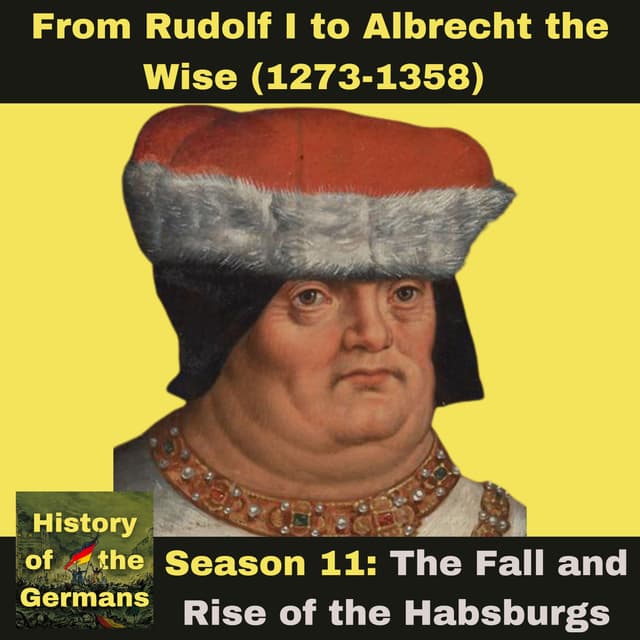
E203 - Ep. 203 – From Rudolf I to Albrecht the Wise 1273-1358
The Habsburg dynasty, originating from Radobot’s castle in 11th-century Switzerland, rose from obscurity to European prominence. In 1273 Rudolf of Habsburg was elected King of the Romans. Far from the later myth of a poor, humble count, Rudolf was wealthy, shrewd, and ruthless. He expanded his family’s holdings through inheritance, war, and diplomacy, eventually securing Austria and Styria after defeating Ottokar II of Bohemia—an acquisition that became the dynasty’s heartland.Rudolf’s hopes to found a hereditary imperial dynasty failed, and his son Albrecht I was murdered in 1308. For decades, the Habsburgs teetered on decline. F...
Published: Aug 21, 2025Duration: 25:27

E203 - The Fall and Rise of the House of Habsburg - Trailer
"Let others wage war: you, happy Austria, marry’. Is that really it? Did this family acquire an empire where the sun never sets through just luck and longevity?That is what we will try to find out in this season where we follow the family from the murder of king Abrecht I in 1308 to the election of emperor Charles V in 1519. For most of that period the Habsburgs had been languishing in the wilderness. They experienced defeats, divisions and humiliations, were even expelled from their duchy of Austria just before they rose meteorically to world le...
Published: Aug 14, 2025Duration: 6:47

Guest Episode: A History of Italy on "A German Priest and a New Emperor"
Hello and welcome friends of the History of the Germans Podcast.This week I will again showcase an independent history podcast I really like and listen to. And just to avoid any misunderstandings, I do this not for commercial reasons. This is literally so that you can find other great shows and well, I can have a break. Today’s show is one you probably already know since I mention it regularly, Mike Corradi’s A History of Italy. Mike is funny, thorough and something I struggle with enormously, concise. And this recent episode is a pr...
Published: Aug 7, 2025Duration: 16:40
E203 - Guest Episode: History Rage talks to Roger Moorhouse about Stauffenberg
Hello friends of the History of the Germans Podcast. As I mentioned last episode, I am on holiday now, which means I spend my time reading up about the Habsburg and getting into gear for the next season.In the meantime, I will showcase some podcasts I really enjoy and listen to regularly. And one of those is History Rage. The host, Paul Bavill interviews historians and history podcaster about the one thing they really hope people would stop believing. Interview is such a lame term for what he does, it is more of a...
Published: Jul 31, 2025Duration: 52:29
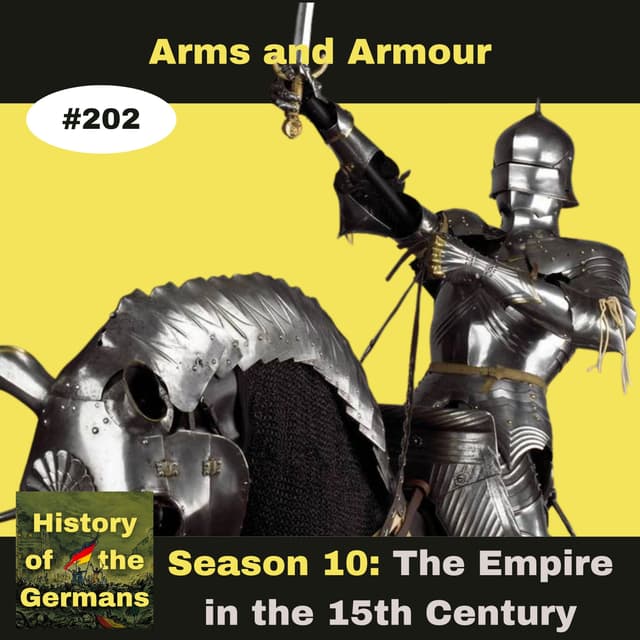
E202 - Ep. 202 - Arms and Armour
In 1550 Spanish court records show that the Augsburg armorer Kolman Helmschmied was paid an advance of 2,000 ducats for a full armour for king Philipp II. The final price for this piece was 3,000 ducats. At the same time Raphael could charge at max 170 ducats for an altarpiece. Even the Renaissances’ best paid artist, Michelangelo received just 3,000 gold florins for the painting of the ceiling of the Sistine chapel. Armour, along with tapestries, were the most valuable artworks of the 15th and 16th century.That was just one set of armour made for the most powerful monarch of the ti...
Published: Jul 24, 2025Duration: 35:50

E201 - Ep. 201 – Mapping the World, or how Germans invented America
When you enter the great hall of the Thomas Jefferson building at the Library of Congress in Washington, the first exhibit you will be facing is their Gutenberg Bible. And it is one of the finest Gutenberg bibles around, one of only three surviving pristine copies on vellum. This was the kind of bible that was so expensive to produce, it bankrupted Gutenberg. When the Library of Congress bought it in 1930, they paid $375,000, roughly $7.5m in today’s money. But this is not the most expensive piece in the library’s collection. That would a work by two...
Published: Jul 17, 2025Duration: 48:37
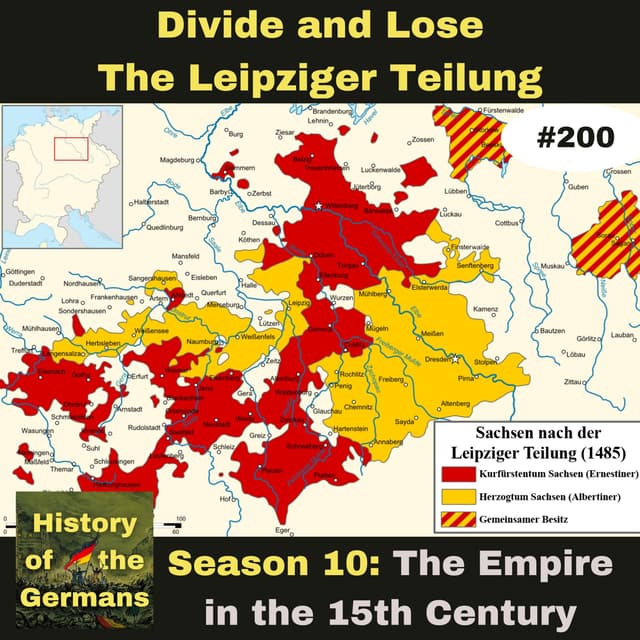
E200 - Ep. 200 – Divide and Lose, the Leipziger Teilung
When two brothers, Ernst and Albrecht of Saxony divided up their enormous inheritance that comprised Thuringia, Meissen and the electorate of Sachsen-Wittenberg, they not only undermined their power base as the de facto #2 amongst the imperial principalities and planted the seed for a conflict that would play a key role in the Reformation but they also laid the foundations for the modern Länder of Thuringia and Saxony. And this division was not driven by the usual family feud but came after 20 years of largely harmonious government and a shared childhood trauma. Why they took, or had t...
Published: Jul 3, 2025Duration: 28:31
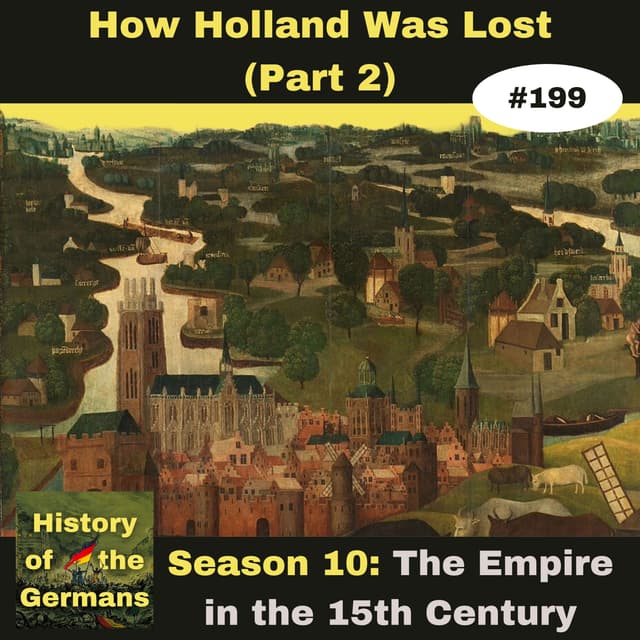
E199 - Ep. 199 – How Holland was Lost to the Holy Roman Empire (Part 2 - the Economy)
So, why did Holland really leave the empire? Was it because the valiant and tragic countess Jacqueline was “hunted down from one land to the other, all of them mine”. Was it a story of misogyny, betrayal, incompetence and ruthless power politics. Yes, it was. But it was a also a story of economic and climate change and one that links into the herring trade of the Hanseatic League, the decline of Teutonic Knights and even into the Hussite Revolt, topics that seem distant, but mattered. This week we focus on this, the latter part of t...
Published: Jun 26, 2025Duration: 35:36
E198 - Ep. 198 – How Holland was Lost to the Holy Roman Empire (Part 1 - the Politics)
Today begins a two part series about how the Low countries modern day Belgium, Netherlands and Luxemburg shifted out of the Holy Empire. These lands, with the exception of Flanders, had been part of the empire for hundreds of years, ever since Henry the Fowler acquired Lothringia for east Francia in 925 – not by conquest but through diplomacy – as was his way.There are two ways to tell the story of the split away from the empire, one is about the dynastic machinations, the marriages, poisonings and inability to produce male heirs, the other one is about economics and...
Published: Jun 19, 2025Duration: 42:33
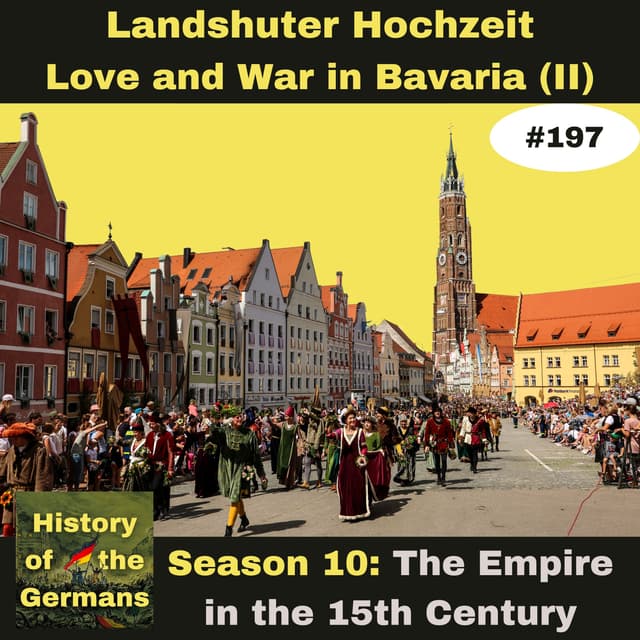
E197 - Ep. 197 – The Landshuter Hochzeit – Love and War in Bavaria (Part 2)
On November 14th and 15th 1475 one of the grandest events in the history of the Holy Roman Empire took place, the Landshuter Hochzeit, the nuptials of Georg, the Rich, son of Ludwig, the Rich and grandson of Heinrich, the Rich, all of them dukes of Bayern-Landshut, and Hedwig, the daughter of king Kasimir IV of Poland and Lithuania. The event attracted 10,000 guests, amongst them the Counts Palatine on the Rhine, the Dukes of Württemberg, the archduke Maximilian of Austria and the emperor Friedrich III himself. It lasted several days during which the eminent invitees as well a...
Published: Jun 12, 2025Duration: 43:50
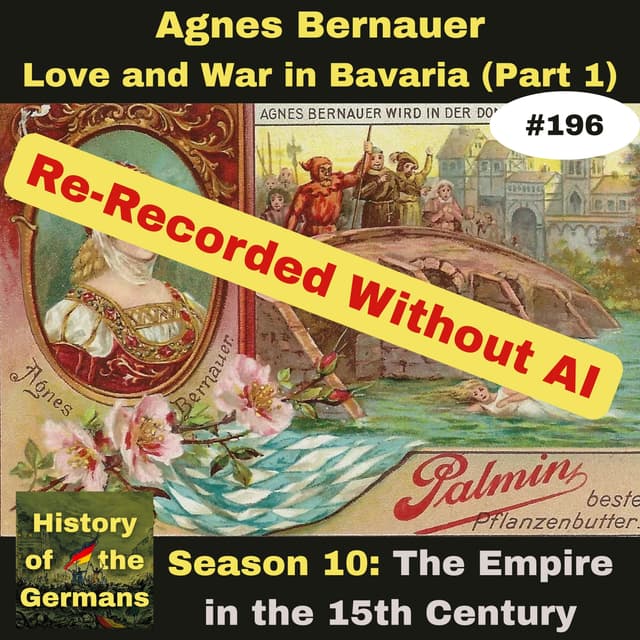
E196 - Ep. 196 – Agnes Bernauer - Love and War in Bavaria – (Part 1)
When I first recorded this episode, my nose was so bunged up, I could barely speak. So I cloned my voice and produced a whole episode using an Ai generated version of me. That was a cool experiment, but ultimately, a canned voice is not the same thing. Fortunately, I am now fully recovered, and I have now re-recorded the same episode again, and this time the names of towns and cities will bear a bit more resemblance to what they are actually called.The music for the show is Flute Sonata in E-flat major...
Published: Jun 5, 2025Duration: 31:25

The Berliner - A Filling Episode
Unfortunately I have been felled by manflu a much belittled affliction. So no Agnes Bernauer and Bavarian dukes. That will be next week.For now some completely random stories about the Berliner, aka Bismarck Doughnuts for our American friends, why and where and how - featuring Felix Mendelssohn, Richard Wagner, Frederick the Great and Cato the Elder and a guy who cuts the hearts out of one age-old culinary traditions...The music for the show is Flute Sonata in E-flat major, H.545 by Carl Phillip Emmanuel Bach (or some claim it as BWV 1031 Johann Sebastian...
Published: May 29, 2025Duration: 12:19
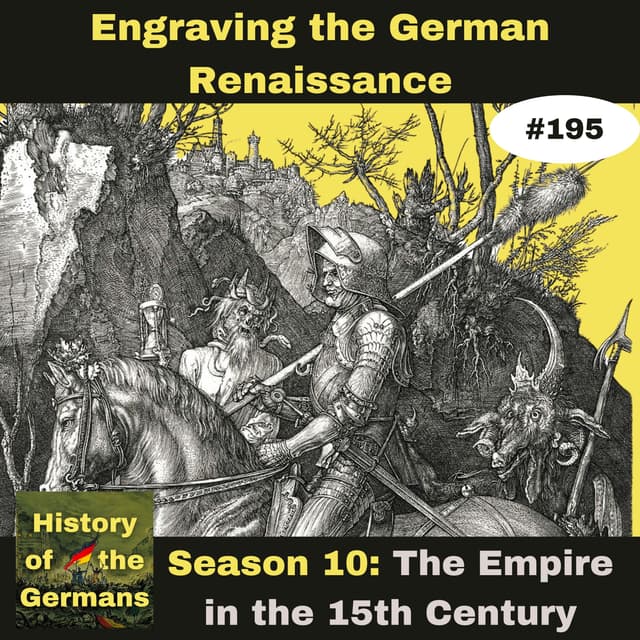
E195 - Ep. 195 – Engraving the German Renaissance
Last year I went to an exhibition at the Städel museum in Frankfurt that was entitled Holbein and the Renaissance in the North. That is the elder Holbein, the father of the Holbein who came to England. This exhibition has now ended, but there is still a great summary available on the Städel website.Though obviously not present at the exhibition, one key focus was the Fugger chapel in the church of St. Anne in Augsburg, one of the earliest and most significant Renaissance building north of the Alps. I wanted to kick off this ep...
Published: May 22, 2025Duration: 35:51
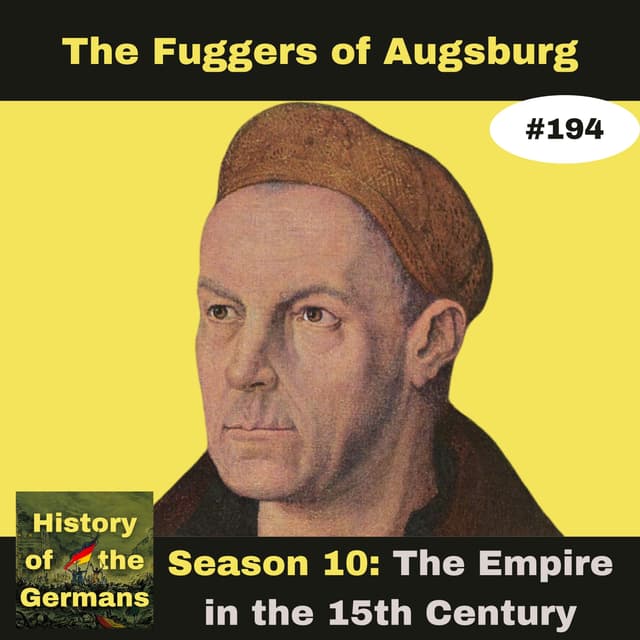
E194 - Ep. 194 – The Fuggers of Augsburg
Hello and welcome to the History of the Germans: Episode 194 – The Fuggers of Augsburg, which is also episode 10 of Season 10 “The Empire in the 15th Century”Jakob Fugger had been dubbed the Richest Man Who Ever Lived, but there are many more contenders, my favorite being an African, Mansa Musa, the ninth Mansa of the Mali empire whose generous gifts during a visit to Mecca in 1324 triggered a currency crisis.That is something Jakob Fugger would never have done. He never was a flamboyant banker who impressed his contemporaries with lavish displays of wealth. He was ac...
Published: May 15, 2025Duration: 50:52
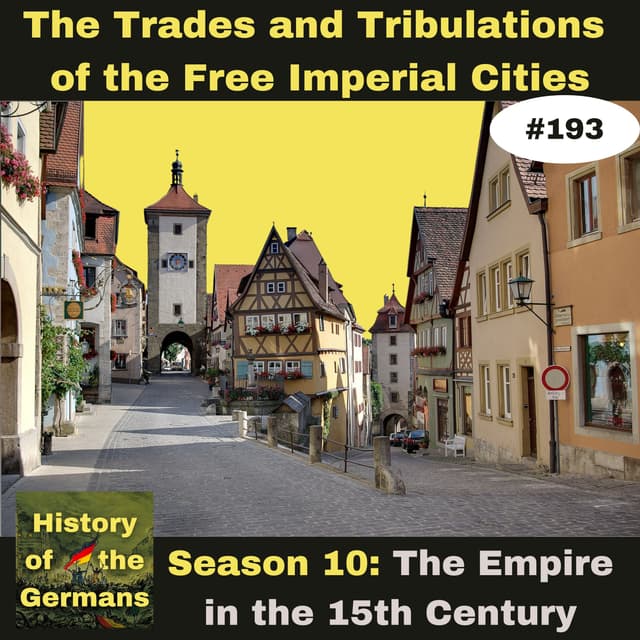
E193 - Ep. 193 - The Trade and Tribulations of the Free Imperial Cities
Ravensburg, and you are very much forgiven if you cannot place it on the map, is today a town of 50,000 in the far south eastern corner of Baden-Württemberg between Friedrichshafen, home of the Zeppelins, and the city of Ulm and its majestic church tower. If you have heard of it, it may be because of Ravensburger, the publisher of puzzles and boardgames, but you would not have associated it with any great mercantile or commercial activity.Nevertheless, in the 15th century it housed the headquarters of a company that held a near monopoly in th...
Published: May 8, 2025Duration: 37:51
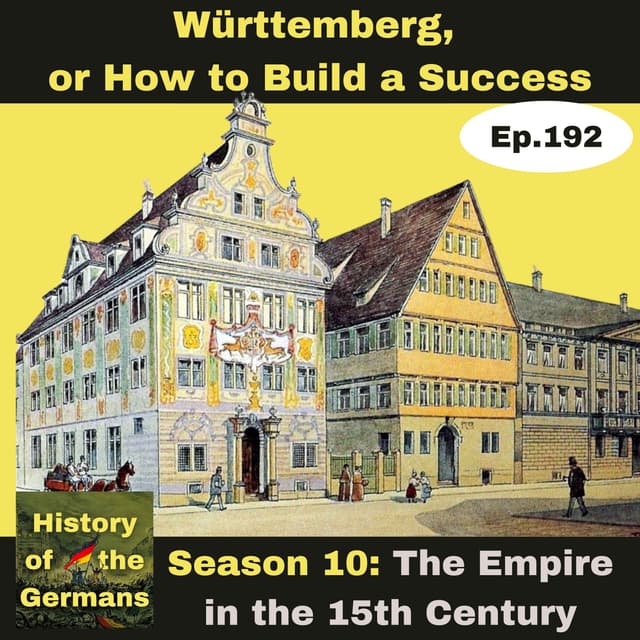
E192 - Ep. 192 - Württemberg, or How to Build a Success
The counts, dukes and ultimately kings of Württemberg had risen to the top by winning the genetic lottery. Their eldest sons tended to be competent, some even extremely so, their wives brought in dowries and sometimes entire counties, and they ruled for long enough that the next generation took over when they were ready.But all that falls apart in the 15th century. They are suddenly afflicted with the disease of dynasties, states inherited by babies and buffoons, some of them managing to be both. That would normally be the death nail for a noble House, b...
Published: May 1, 2025Duration: 47:23