VoxTalks Economics
byVoxTalks
BusinessEducationNewsScienceSocial
Episodes(40 episodes)

S9E8 - The economic consequences of living longer
Recorded at the CEPR Annual Symposium in Paris. As we expect to live longer, what does this mean for the choices we make, and for the economy? What decisions will seniors be making about their later years, and do the opportunities given to them by society reflect their abilities, needs and ambitions? In Paris Tim Phillips caught up with Martin Ellison of University of Oxford and Julian Ashwin of Maastricht University to talk about their work on the macroeconomic impact of longevity.
Published: Feb 4, 2026Duration: 16:06

S9E7 - How exchange rates responded to tariffs
After Liberation Day, the dollar fell by 6%. We would usually expect tariffs to send exchange rates in the other direction. So what happened?In another episode recorded at the CEPR Annual Symposium in Paris, Giancarlo Corsetti tells Tim Phillips about new research that shows how exchange rates are responding to US tariffs since 2018. When tariffs are expected and retaliation is swift, he argues, then market reactions reflect a repricing of long-run risk, rather than the text-book response we might expect.
Published: Jan 28, 2026Duration: 16:48
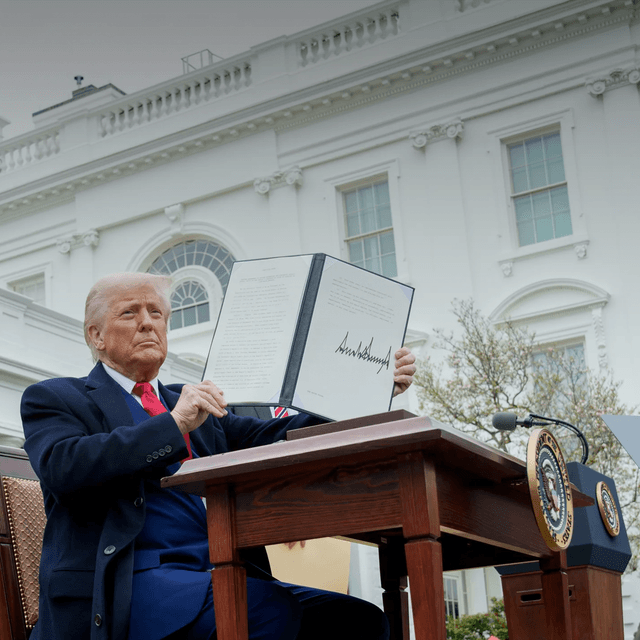
S9E6 - What's next for Trump’s tariffs?
In 2025, the trade story was about tariffs. And that story isn’t over. Does anyone know what happens next? Richard Baldwin of IMD Business School and CEPR was author of the chapter on tariffs in the CEPR Press book The Economic Consequences of The Second Trump Administration, and also of The Great Trade Hack, published by CEPR press in 2025. Gene Grossman of Princeton and CEPR analysed the legality of the Trump tariffs in a recent CEPR discussion paper.So, at the CEPR Symposium in Paris, Tim Phillips asked both of them: What happens next?D...
Published: Jan 23, 2026Duration: 17:06

S9E5 - Is US debt sustainable?
Another special episode recorded at the CEPR annual symposium in Paris.When does the level of debt in the US become a problem for the economy, and for ordinary Americans? And when it does, what are the policy options to fix it?That’s the topic of a Chapter in the CEPR book. The authors are Ugo Panizza of the Graduate Institute, Geneva and CEPR, and Antonio Fatás of INSEAD and CEPR. They talk to Tim Phillips about how recent policy – notably the One Big Beautiful Bill Act – is blowing up US debt and warn th...
Published: Jan 21, 2026Duration: 18:40

S9E4 - Do stablecoins threaten financial stability?
Stablecoins are digital tokens, pegged to a fiat currency. What could possibly go wrong?For one type of stablecoin the answer is: plenty, according to Richard Portes. The founder and honorary president of CEPR is also co-chair of the European Systemic Risk Board Crypto Asset Task Force. In this role he has been investigating the risks of multi-issuer stablecoins in Europe. He tells Tim Phillips that, if one of these stablecoins hit trouble, US holders could use European regulation to recover their investment from the coin’s European reserves. And that, he argues, would be a threat to...
Published: Jan 16, 2026Duration: 19:51

S9E3 - Can Europe defend itself?
In another of our special episodes recorded at the CEPR annual Symposium, we ask: is it time for Europe to rearm?The message from the US could not be clearer: it is time for European countries to take care of their own security. If Europe decides to rearm, it has the industrial base – but Moritz Schularick of the Kiel Institute and CEPR warns that it isn’t converting that capacity into credible deterrence. Tim Phillips asks him what European rearmament could mean in practice: not just scaling up production but buying smarter and investing in next...
Published: Jan 14, 2026Duration: 24:45

S9E2 - Has AI eaten the economics major?
In another of our episodes recorded at the CEPR Paris Symposium, we ask: When Gen AI can do an undergraduate’s problem set in seconds, how should teaching, and the syllabus, respond? Who better to answer this than Wendy Carlin of UCL and CEPR? Wendy – who has recently become Dame Wendy – was at the symposium to talk about her project to change economics teaching through the CORE Project, which more than 500 institutions use to teach introductory economics in a way that flips the standard textbook treatment on it head.Recently Wendy and CORE have been working...
Published: Jan 9, 2026Duration: 25:25
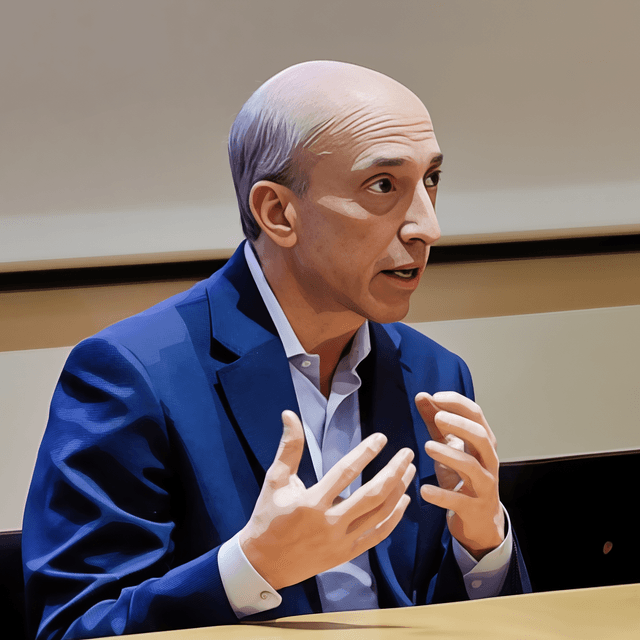
S9E1 - Trump, trade, and AI growth
Another special episode recorded at the CEPR annual symposium in Paris. The Trump administration says it wants America to lead in AI, but what does that mean in practice for trade and productivity? Will AI make growth great again, or just inflate a short-term capital spending boom?Gary Gensler of MIT and CEPR (also a former chair of the Securities and Exchange Commission) unpacks the administration’s AI action plan, helps us work out what's happening to export controls, and untangles the deal-making geopolitics of AI hardware.
Published: Jan 7, 2026Duration: 24:19
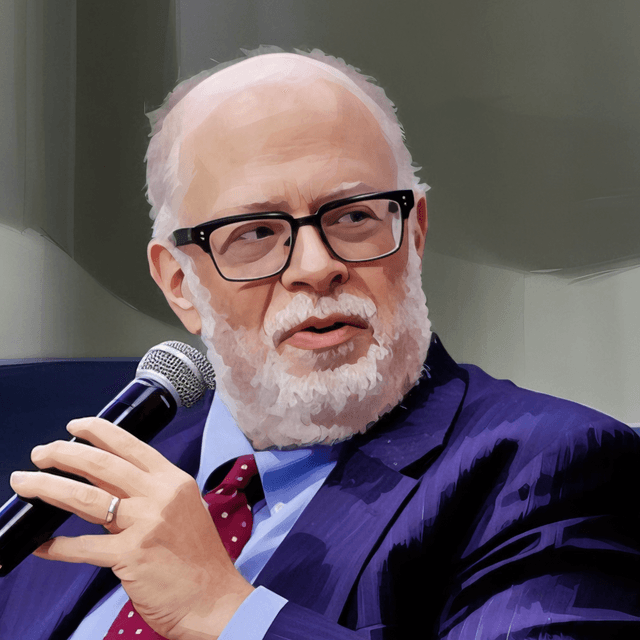
S8E65 - The future of globalisation
At the CEPR annual Symposium in Paris we sat down with Adam Posen, president of the Peterson Institute for International Economics, a distinguished fellow of CEPR, and a global authority on geopolitics and trade to discuss the profound changes in the multilateral order in 2025, how countries will adjust to this new normal – and whether the changes we have seen will ever be unwound.
Published: Dec 19, 2025Duration: 25:36
S8E64 - A London economic consensus?
Who would be a policymaker right now? The list of economic problems that we need to solve ranges from “very difficult” to “existential”. An ambitious new book collects the ideas of many influential economists on how to approach these challenges. But can it avoid the mistakes of previous attempts to find an economic policy consensus?Andrés Velasco and Tim Besley are two of the editors of The London Consensus. Tim Phillips joined them at The London School of Economics to ask why the book was created, how policymakers can use it, and whether we should be wary of econom...
Published: Dec 12, 2025Duration: 43:12

S8E63 - Do sanctions work?
Economic sanctions are the big geoeconomic bazooka. But what does history tell us about how well they work, and their relevance today. And does the theory match the data?Moritz Schularick of the Kiel Institute for the World Economy and CEPR talks to Tim Phillips about the evidence of the history of sanctions on what they can achieve, whether we expect too much too soon from small sanctions – and whether politicians are prepared to impose the sanctions that bite.
Published: Dec 5, 2025Duration: 18:39

S8E62 - The cost of lost biodiversity
Biodiversity is essential for the wide range of economic activities that our planet needs. Yet, the economic consequences of its global decline are hard to estimate, because most population studies focus on individual species in isolation.Frederik Noack of the University of British Columbia argues that this misses a central insight about biodiversity: a healthy environment depends not just on individual species, but also on the way they work together to keep our natural environment in balance. One especially important aspect of this is the way that birds help keep crops safe from pests and reduce the need...
Published: Nov 28, 2025Duration: 18:00

S8E61 - The politics of sustainability reporting
In 2021, at COP26, the International Accounting Standards Board announced it would create a standard for this reporting.It wants to integrate sustainability reporting with traditional IFRS accounting. Should firms be compelled by regulators to disclose their impact on the climate in their corporate reporting? Investors value convergence in sustainability reporting standards, but they are facing stiff opposition both in the US and Europe – even while developing economies embrace the new regime.Lucrezia Reichlin of the London Business School and CEPR talked to Tim Phillips on the progress to sustainability standards, the scope of reporting, who wants it...
Published: Nov 21, 2025Duration: 22:12

S8E60 - The planet has a problem with populism
In Europe and beyond, populist politicians continue to gain ground. What message are voters sending? Are politicians from other parties listening, and explaining their policies in a way that will successfully reach supporters of populist parties?There are one set of policies for which this may be a huge problem soon. What does this mean for that those tricky choices that politicians will have to make when dealing with the consequences of climate change, and sustainability?Sergei Guriev of London Business School and Catherine de Vries of Bocconi University have both examined what is driving support...
Published: Nov 19, 2025Duration: 34:09

S8E59 - Designing markets for nature
Our economy is embedded in nature, but nature is in danger. External funding is needed, especially in the Global South, to support the conservation of our natural ecosystems. Markets can play a role, but the way in which voluntary carbon markets do this has low public trust which, from recent news, may be deserved.Estelle Cantillon of Université libre de Bruxelles and CEPR tells Tim Phillips about her proposal for a new market mechanism to channel funds to projects that will conserve or restore our natural environment by paying dividends to those who invest. But how will it a...
Published: Nov 14, 2025Duration: 17:52

S8E58 - A big push for climate policy
“What is needed is non-marginal, transformative change to shift the economy, technology, and society”. That’s the typically forthright recommendation from Rick van der Ploeg of the University of Oxford and University of Amsterdam for how to ensure that climate policy is effective at changing our habits and behaviour. He argues that the gradual changes in habits that current policies target don’t go far enough, and that we run the risk of backsliding. But what does this mean in practice? Rick spoke to Tim Phillips about what policies to push, when to push them – and how big the push needs to b
Published: Nov 12, 2025Duration: 24:10

S8E57 - How to make carbon removal work
We are familiar with climate policy to reduce emissions. We know about the policies to adapt to climate change. But can we successfully reduce the amount of CO2 in the atmosphere, and how do we create policies and incentives to invest in, and take advantage of, those technologies?Ottmar Edenhofer, Director of the Potsdam Institute for Climate Impact Research and chair of the European Scientific Advisory Board on Climate Change, talks to Tim Phillips about an aspect of climate policy that is becoming increasingly important.
Published: Nov 7, 2025Duration: 19:32

S8E56 - The economics of biodiversity
"The Economics of Biodiversity” was published by the UK Treasury in 2021. It sets out how economic systems value biodiversity and natural capital, and which policies would preserve and restore nature.The project leader was Professor Sir Partha Dasgupta of the University of Cambridge. In the latest of our special episodes recorded at the first Hoffmann Centre / CEPR / ReCIPE Conference continue, he tells Tim Phillips what he learned from hanging out with ecologists, why we need indicators of economic performance that value nature, and why we should worry about the decline of natural capital. The Economics of Bio...
Published: Nov 5, 2025Duration: 33:34

S8E55 - Overcoming climate agenda fatigue
Can COP 30 get the green transition back on track? It’s not a great time for international cooperation right now and, with hindsight, was the period from 2017 to 2022 a “golden moment” the climate transition, and was it an opportunity missed?That’s the argument presented by Livio Stracca, Deputy Director General Financial Stability at the European Central Bank, also the chair of NGFS work on climate scenarios. He talks to Tim Phillips about what we can learn from this golden moment, and what can be done this time around to avoid the dangers of what Livio calls “climate agenda fat...
Published: Oct 31, 2025Duration: 20:13

S8E54 - Coalitions of the willing
In the first of our special episodes from the first Hoffmann Centre / CEPR / ReCIPE Conference, we’re discussing what chances there are of significant multilateral agreements being signed at COP 30 and, given that the chances are low, what plan B might be.Beatrice Weder di Mauro of CEPR, Hoffmann Centre and the Geneva Graduate Institute tells Tim Phillips that, if everyone can’t agree, then coalitions of the willing – climate or finance clubs that offer incentives for the countries that want to join – can agree their own sustainability policies. But what are those incentives? And who will lead?
Published: Oct 29, 2025Duration: 25:55